Biodiversity
How do we understand and protect biodiversity?
The Atlantic Forest is one of the world's top biodiversity hotspots.
It contains over 20,000 plant species (one in 14 on Earth) and more than 2,000 vertebrate species. The Atlantic Forest developed before the Amazon, and many of its species are endemic, i.e., not found anywhere else. Despite the forest's fragmented state, its biodiversity is vibrant, with scientists having found over 400 tree species in a single hectare.
But what is biodiversity, why is it so important, and how can we better protect it?
What is Biodiversity?
Biodiversity is the variation among living organisms and ecosystems.
Biodiversity includes everything from genetic diversity at the cellular level and variation within and between species to the diversity of ecosystems spanning coral reefs, grasslands, and forests. Increased biodiversity means increased resilience. It is the natural machinery that has allowed life to prevail and thrive for so long.
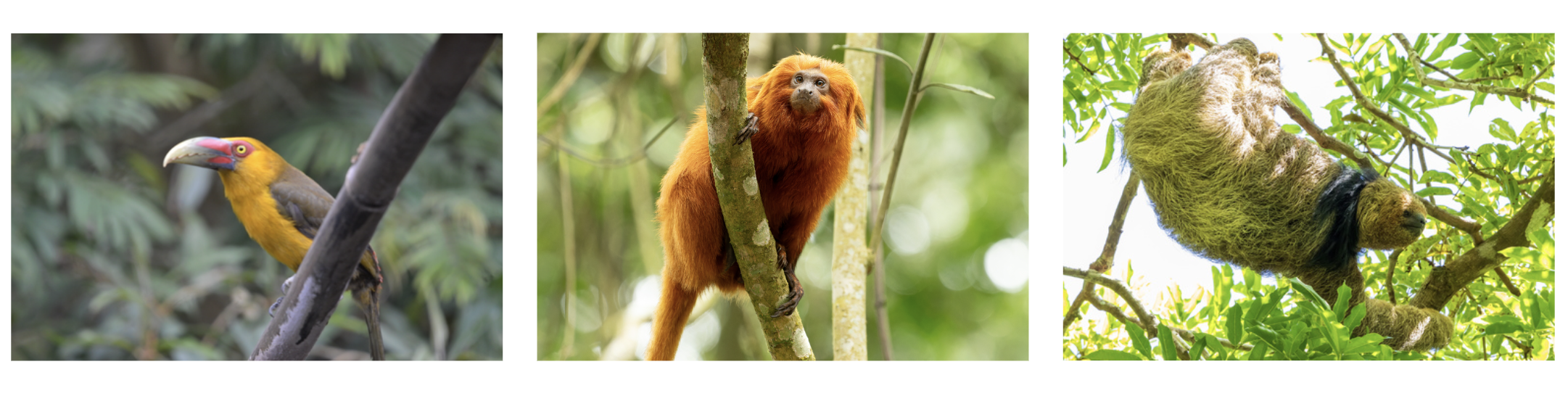
Some iconic species only found in the Atlantic Forest. (Left): Saffron Toucanet by Claudia Mermelstein under BY-NC (Middle): Golden Lion Tamarin by Tomaz de Melo under CC BY-NC-ND (Right) Maned Three-toed Sloth by Thiago Antunes under CC BY-NC
I am always amazed by the incredible diversity of life. Here are just a few examples of species only found in the Atlantic Forest:
-
Saffron Toucanet: This saffron-yellow bird is one of the few birds able to eat larger fruit, making it crucial for plants with larger seeds to disperse their seeds over larger areas. Adult females are less golden and more olive-colored.
-
Golden Lion Tamarin: These golden monkeys are only found in Rio de Janeiro. They are monogamous, meaning they form long-term, cooperative relationships with one partner. The recovery of golden lion tamarins from practically extinct to almost 4,800 individuals in the wild is one of the premier reintroduction success stories. It became such a distinct symbol that it was featured on the Brazilian 20 Real note.
-
Maned Sloth: These slots can measure up to 72 centimeters. They have a thick outer coat that is the basis of a symbiotic relationship with algae, mites, and beetles. Sloth hairs have microcracks that provide a safe environment for growth, and the resulting greenish fur tint provides camouflage.
Biodiversity is critical to ecosystems and human survival.
According to World Economic Forum’s Global Risks Report 2023, biodiversity loss and ecosystem collapse are among the top five risks facing the world over the next 10 years. Biodiverse ecosystems provide everything from food and protection to the trees that clean the air we breathe.
Over 50% of modern medicines are derived from natural sources, including life-saving antibiotics and painkillers. According to the World Health Organization (WHO), over 75% of emerging infectious diseases arise in areas with disrupted ecosystems from deforestation or land-use change. Beyond medicine, biodiversity is essential for food supply and forest health. 70-90% of tropical forests depend on animals to disperse their seeds (Bello et al.), and more than 75% of global food crops rely on pollinators.
A healthy and diverse ecosystem is a resilient one that allows life to survive and thrive.
However, over the past 50 years, the average size of monitored wildlife populations in Latin America and the Caribbean shrunk by a concerning 95%, as measured by the Living Planet Index (LPI) developed by WWF. Reasons behind the decline include habitat loss, overexploitation, climate change, pollution, invasive species, and disease. Declines in biodiversity increase the risk of food shortages, water scarcity, and disease outbreaks.
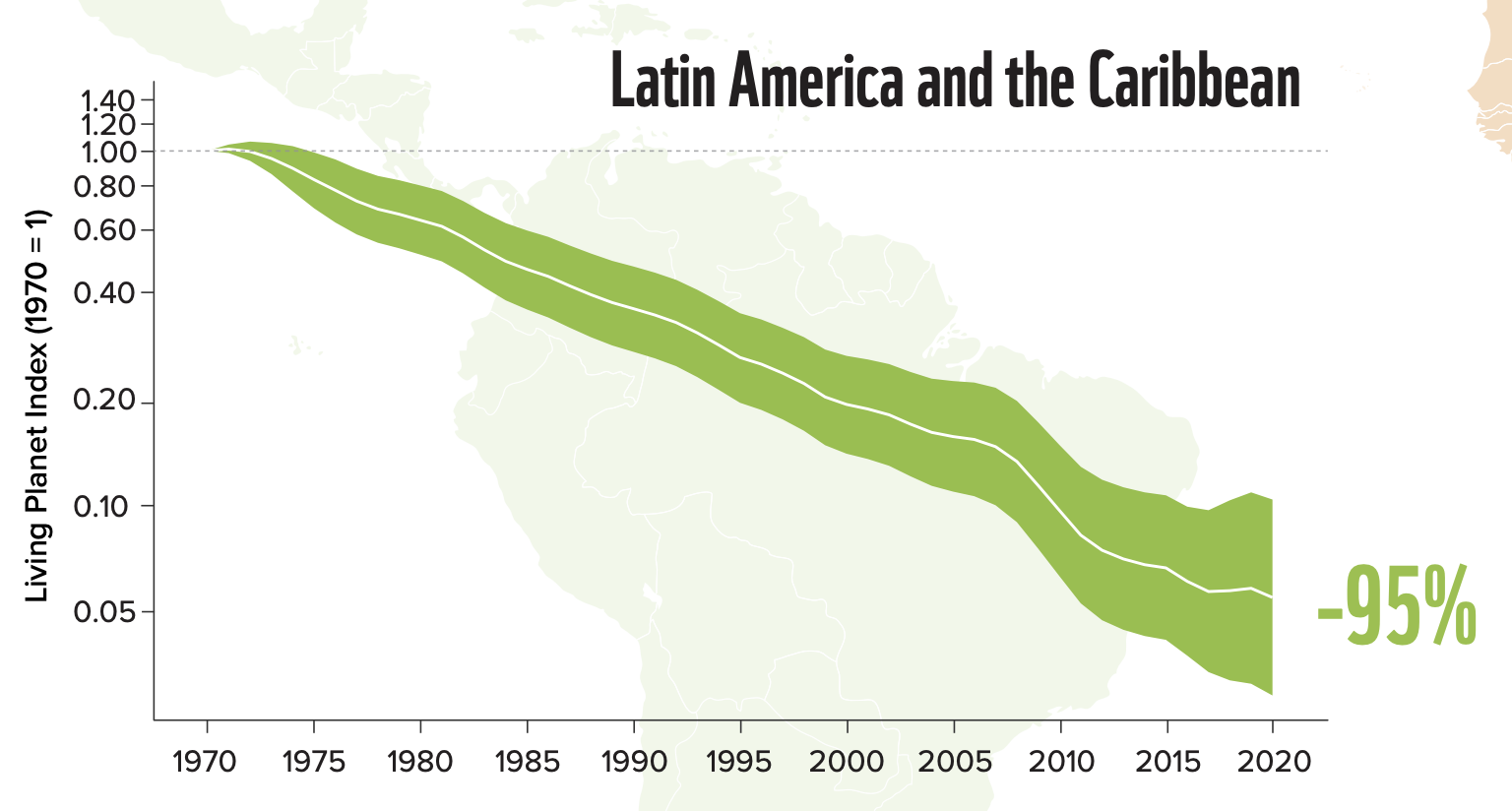
Monitored wildlife populations in Latin America and the Caribbean shrunk by 95% in the past 50 years. Credit: 2024 Living Planet Report
Tracking Biodiversity
The IUCN Red List of Threatened Species predicts how at risk different species are of extinction. For instance, a species categorized as "Critically Endangered (CR)" is at an extremely high risk of extinction without significant intervention.
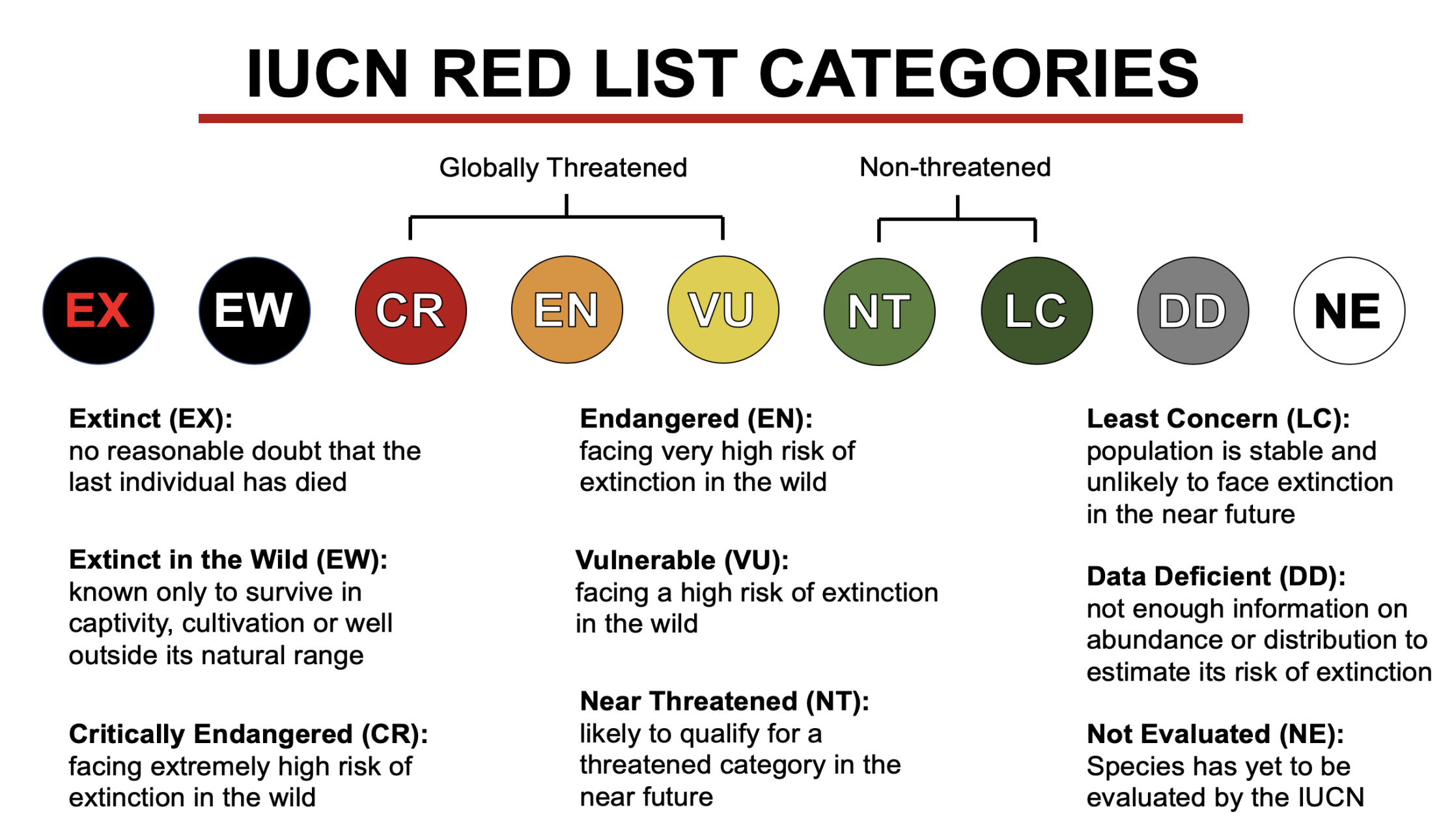
IUCN Red List Categories. Credit: Cerren Richards
The IUCN Red List is an essential indicator of global biodiversity health used in planning conservation programs. It provides guidance on where more resources are needed, which key habitats to protect, and helps track the success rate of conservation efforts.
However, one key limitation is data.
Current knowledge of the Atlantic Forest is based on only 0.01% of the remaining vegetation. It is estimated that only 25% of plant species in South America have 20 or more recorded observations, and 10% lack any records at all, making them invisible species. Moreover, just tracking the known species is an enormous feat, since the Atlantic Forest spans such a vast area and contains such a diversity of species.
Here, technology can help scientists track and discover species to answer a wide range of questions about conservation and climate change.
In this article, we will focus on two ways to capture and analyze species data: camera traps and audio traps.
Camera Traps
What are Camera Traps?
To help understand track animals, their health, and behavior, we often use camera traps.
These are outdoor cameras, literally strapped to a tree or pole, that take pictures and videos of animals as they move past. Each camera trap records its exact location, providing “ground truth” evidence of which species occupy an area. Researchers leave them in the wild for a period of time and then periodically retrieve the images for review.
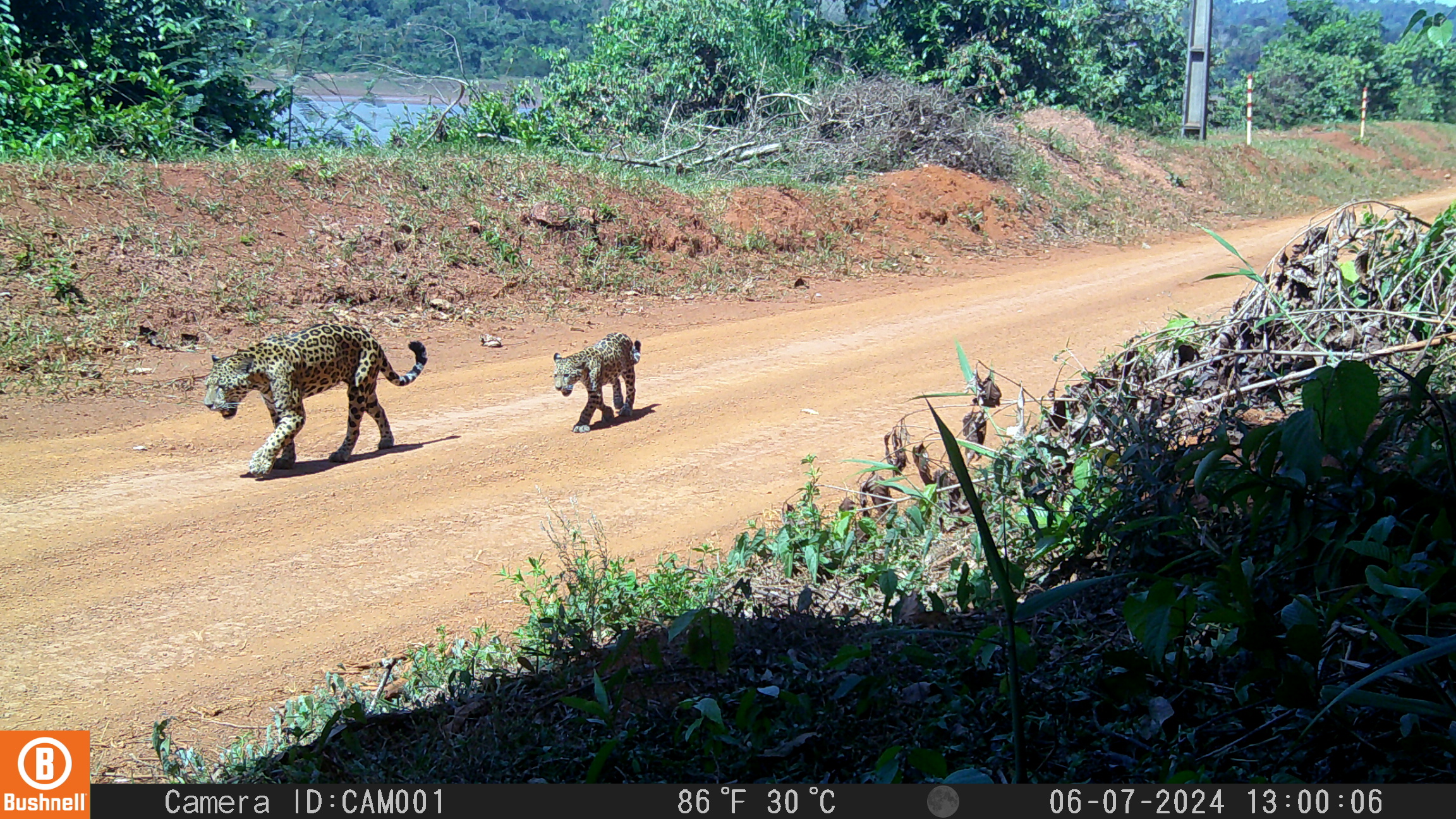
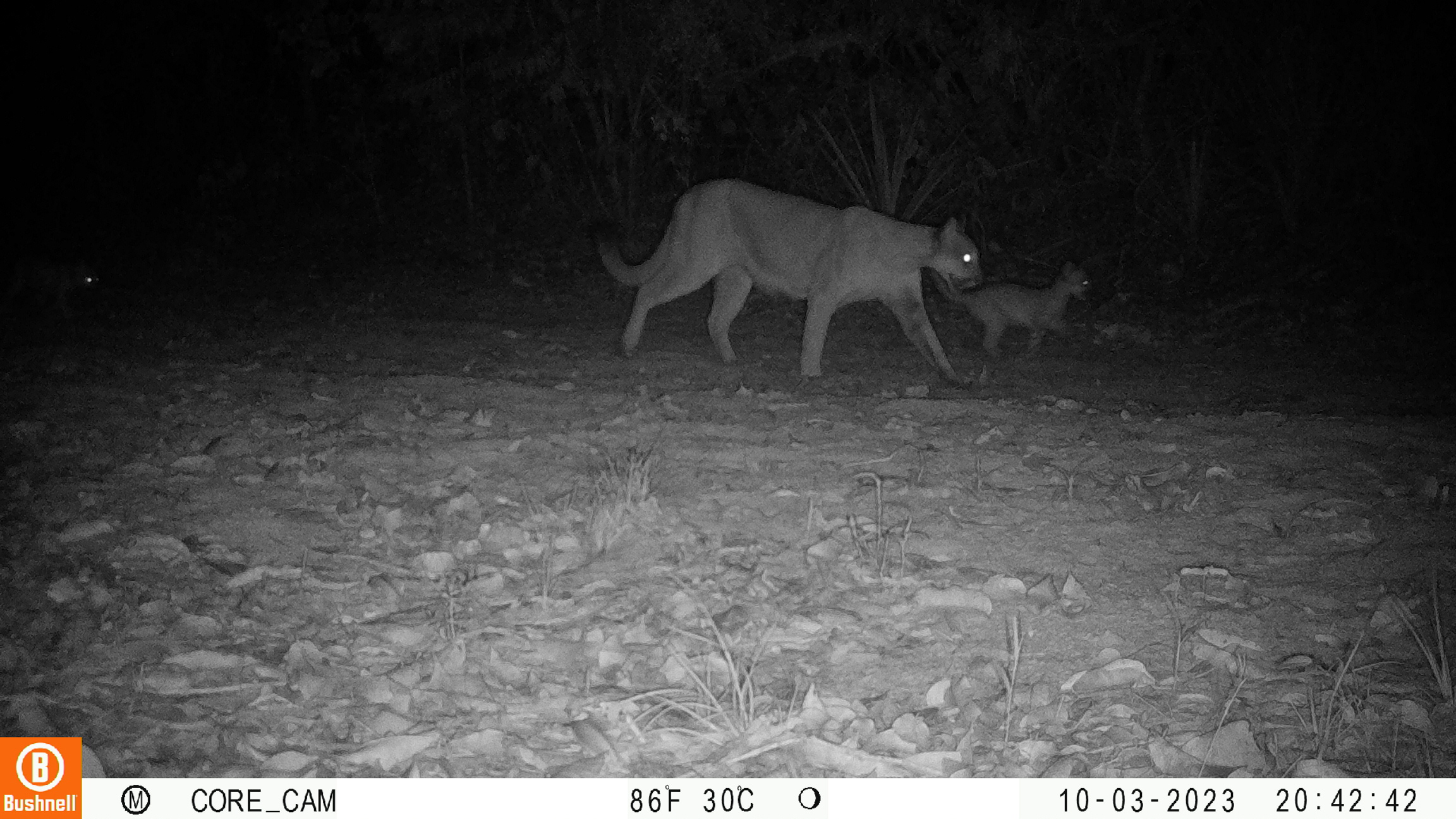
(Left): A jaguar and her cub. (Right): A puma and her cub at night. Credit: INCAB Brazil via Yuri Souza.
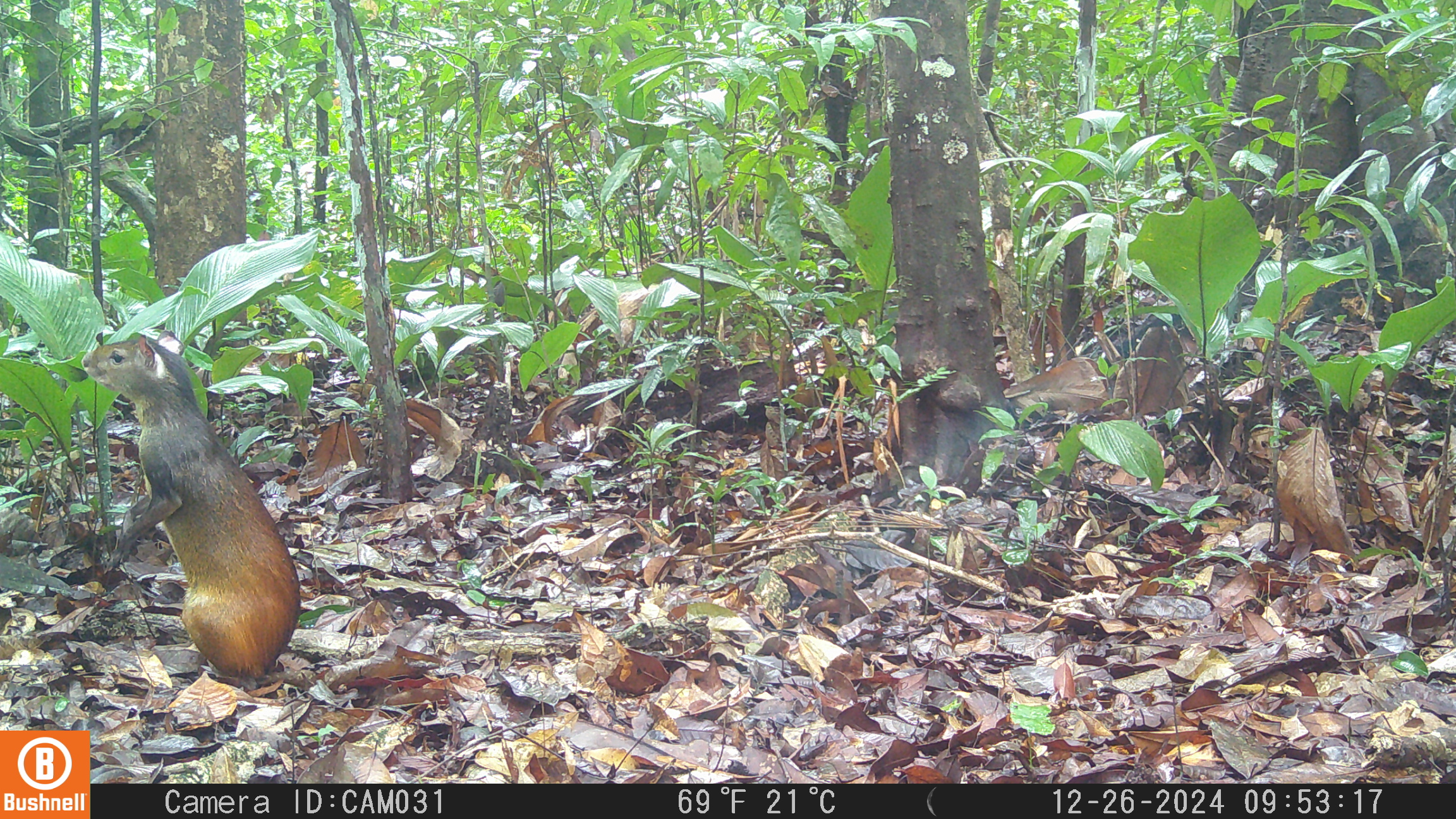
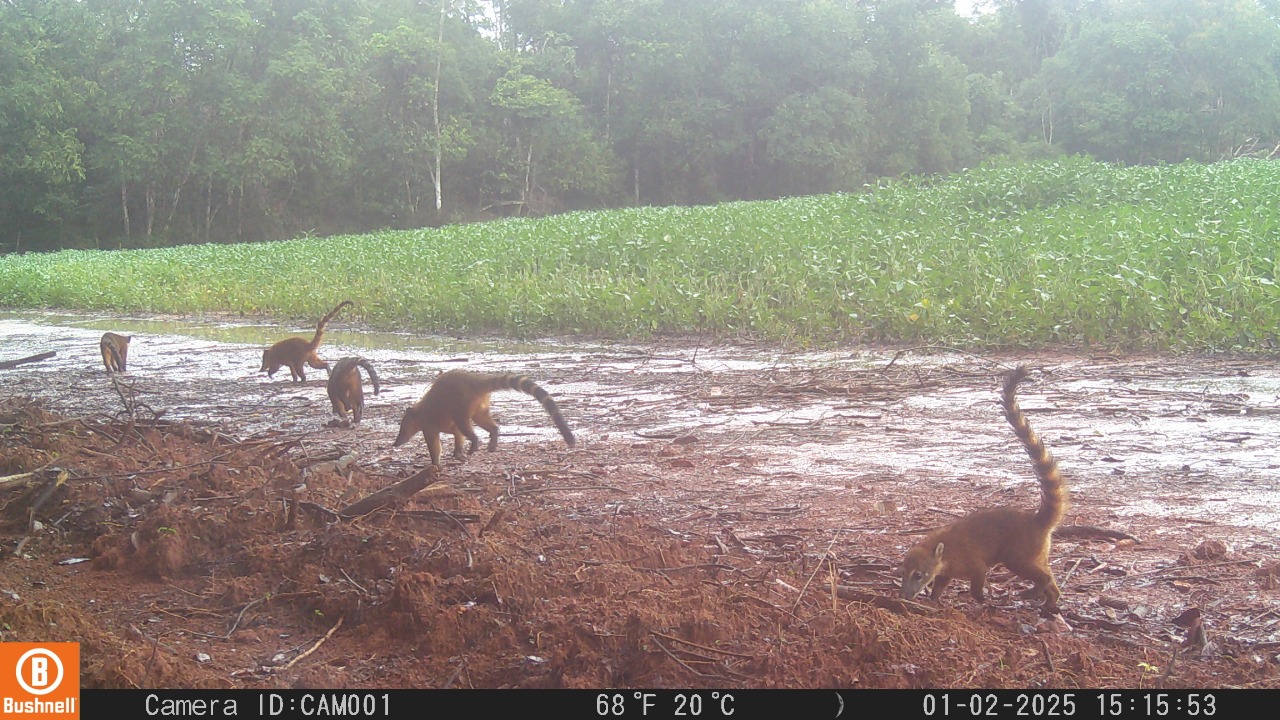
(Left): An agouti. (Right): A group of coati's. Credit: INCAB Brazil via Yuri Souza.
How are Camera Traps Useful?
I spoke with Yuri Souza, an ecologist specializing in data-driven species research. Souza led the research project ATLANTIC MAMMALS, in which they created a data set of medium- and large-sized mammals of the Atlantic Forest.
As an example of the application of camera traps, Souza worked with INCAB Brazil (eng. LTCI: Lowland Tapir Conservation Initiative), a nationwide conservation program focused on the research and conservation of tapirs. The tapir is one of the largest surviving native land mammals in the Atlantic Forest. Tapirs are both great swimmers and move quickly on land.
A South American Lowland Tapir and her baby. Video credit: Laís Lautenschlager, Ph.D. via Yuri Souza.
Camera traps help provide information on the health and behavior of the tapirs, and these traps can offer more than just photos.
By using additional captured information, such as location, season, and time, and correlating observations across camera traps, you can learn surprisingly much about the animal's health and behavior. Yuri Souza says, "There is a lot of information hidden there. This animal did this individual pass in front of this camera, and then another camera. Using the difference between one camera and another, we can predict movement patterns of these tapirs."
Some images are so detailed that you can tease apart and track specific individuals, as Souza notes, "in the case of the tapirs, we can tell which individual is which by looking at details like scars, colors of the fur, and the size of the tail."
Souza places particular emphasis on body patch patterns. These patterns are often unique to each tapir and thus serve as important features that allow scientists to identify them. Although they fade as tapirs grow older, they can still be used to track their development from babies to adults.
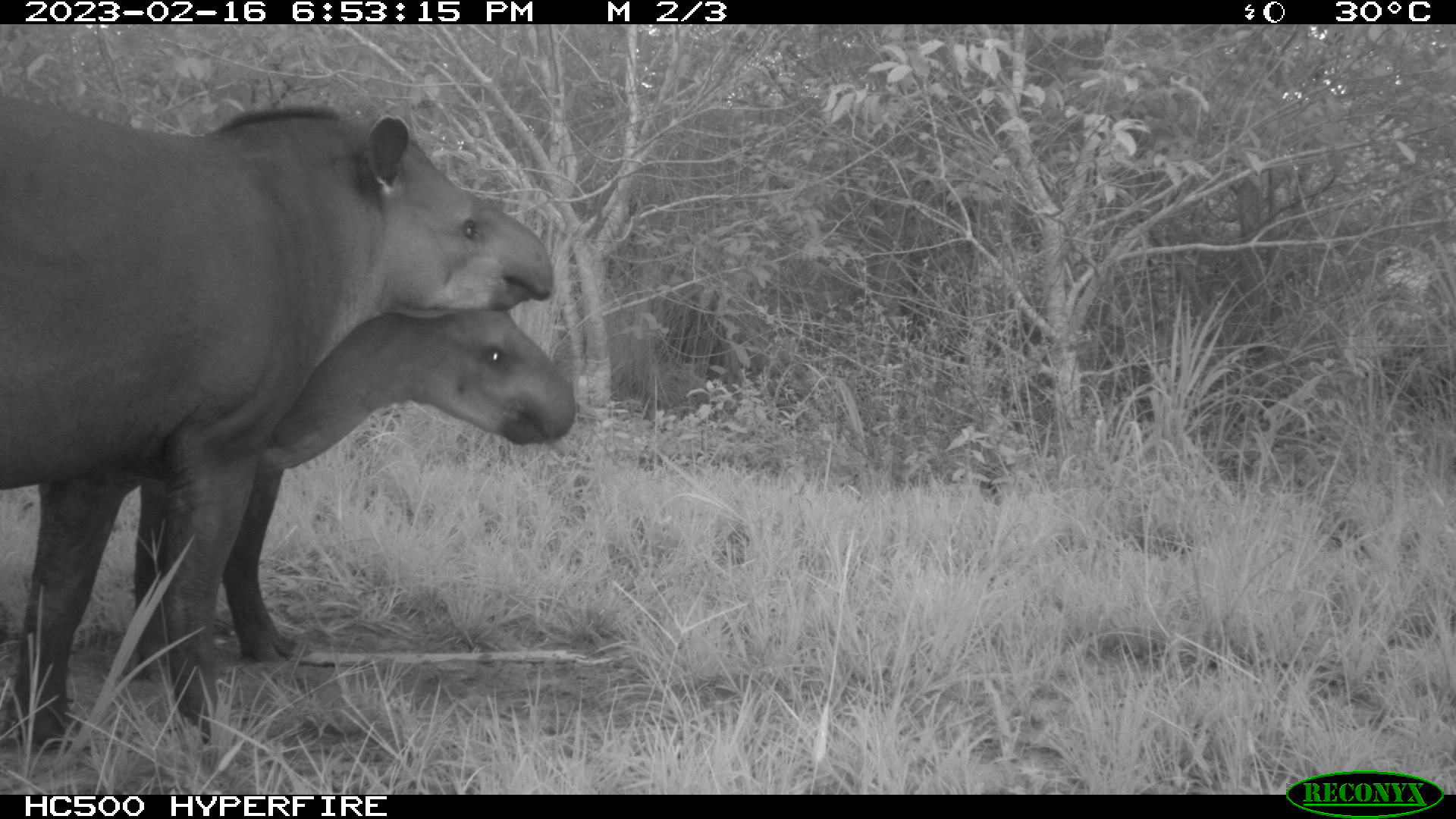
Two tapirs captured by a camera trap. Credit: INCAB Brazil via Yuri Souza.
Camera traps and biodiversity data can even reveal how landscapes are changing.
When the climate changes, species have to adapt, sometimes by expanding their range into new areas. Seeing animals "out of place" can therefore act as an early warning sign of shifting habitats. Souza says, "With deforestation, the Brazilian savanna can invade the Atlantic Forest, requiring these mammals, like the maned wolf, anteater, and deer, to move. So finding these species in the savanna rather than in the Atlantic forest could be a sign that it's not a dense forest anymore and is becoming something different."
Machine Learning and Camera Traps
Camera-trap images can provide a great deal of information. However, manually reviewing every image can be very time-consuming.
There are many false positives, meaning empty images. Since many camera traps are motion-activated, a gust of wind, some leaves turning, or precipitation could trigger a photograph. Moreover, mammals are not found everywhere at once, meaning there could be long periods between sightings at a given location.
Here, a machine learning algorithm can help speed up the process by filtering for the photos of interest for downstream analysis.
One example is the deep learning library PyTorch-Wildlife by the Microsoft AI 4 Good lab. PyTorch-Wildlife is a conservation platform and community that trains, modifies, and shares AI models for conservation. The most widely used model to date is the MegaDetector, a series of AI models that can classify objects in an image as animal, vehicle, person, or as an empty frame.
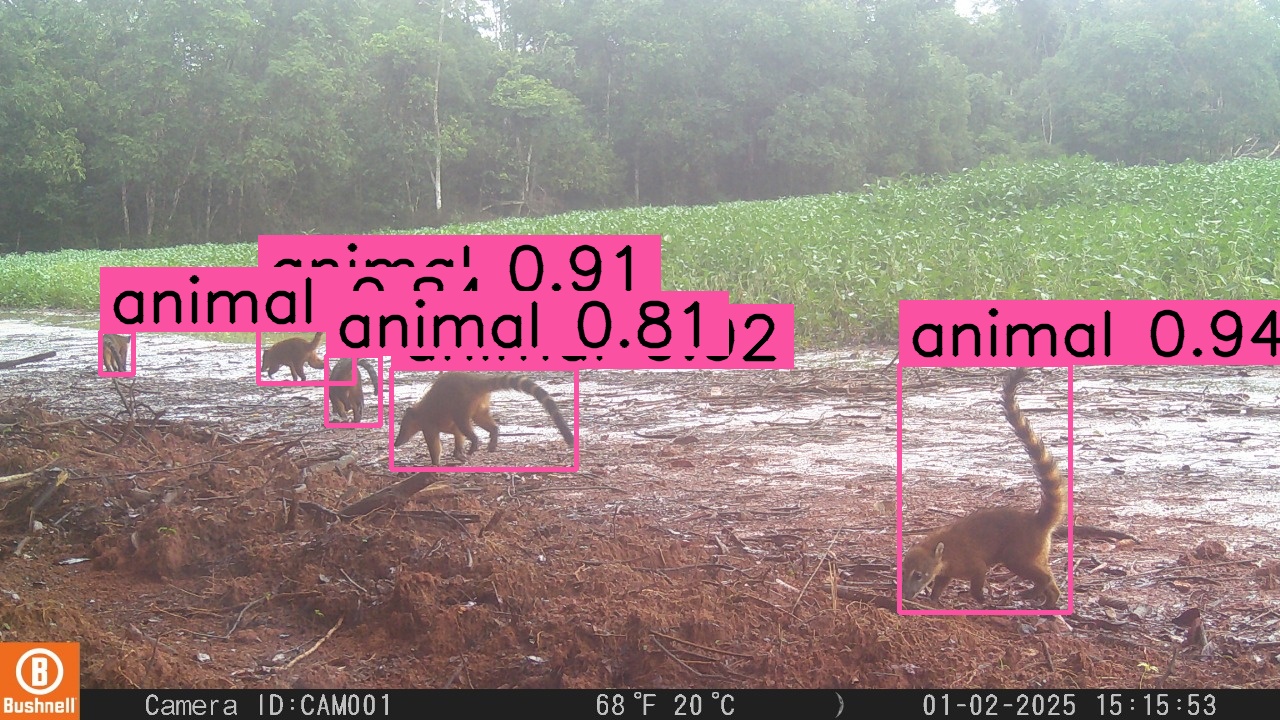
MegaDetector V6 animal bounding box results on an image of a group of coati's. Original Image: INCAB Brazil via Yuri Souza.
The MegaDetector V6 is based on the YOLOv5 machine learning architecture, which consists of a backbone, spatial pyramid pooling, and a head for generating the final output. It can only provide animal bounding boxes, but can be combined with other models, such as Google SpeciesNet, to obtain more specific animal classifications.
MegaDetector V6 applied to every frame of a video of a puma. Original Video: Laís Lautenschlager, Ph.D. via Yuri Souza.
A machine learning model can thus serve as a first filter, reducing thousands of images to a few hundred of high interest. Moreover, they can be integrated into real-time pipelines, for example, to notify park rangers of potential poachers or other actors posing a threat to wildlife.
However, it is worth noting that although progress has been impressive, the models are not perfect and can both miss animals and produce empty images. Camera traps, in particular, face many challenges, such as different times of day, varying distances and animal sizes in the frame, and sparse sightings.
Wildlife Insights
One of the largest communities and platforms for camera-trap- and data-driven conservation is Wildlife Insights.
Wildlife Insights aims to connect conservation practitioners to share skills, technology, and learnings from conservation efforts all around the world. For instance, they allow users to crowd-source images to train better collective AI models. They also provide training, expertise, and partners to help realize more successful conservation programs.
One aspect of Wildlife Insights I really appreciate is their focus not only on developing capable technology but also on fostering human connections and skills. Ultimately, they give the knowledge, tools, and partners in the hands of the people doing on-the-ground conservation work, giving them the power to shape and use this technology.
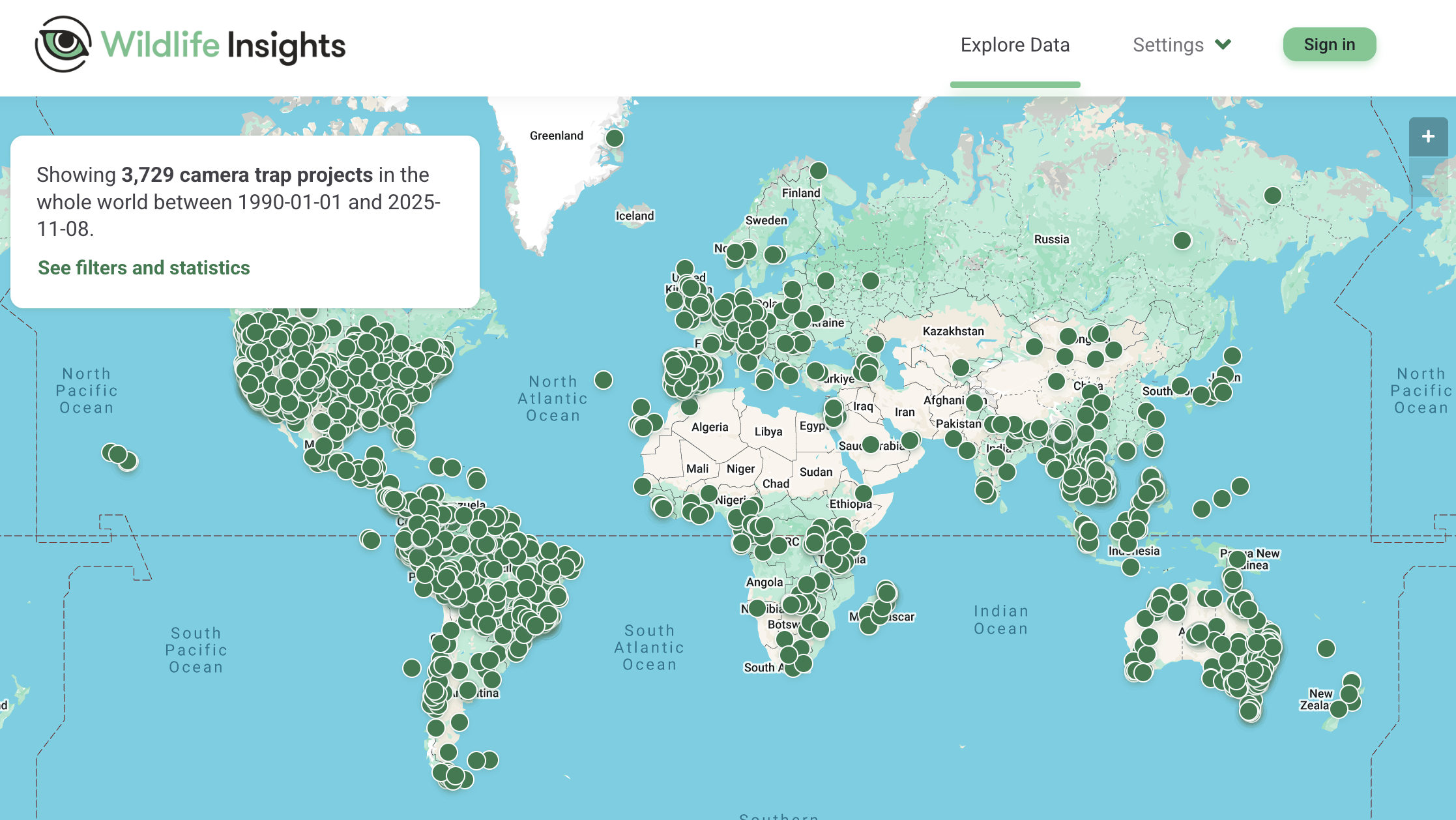
A common bottleneck in machine learning pipelines is data. The Wildlife Insights camera trap projects dashboard enables practitioners to share data worldwide.
Audio Traps
Many animals we cannot track, but we can hear.
Audio traps are a type of bioacoustic sensor that captures audio, providing another valuable way to detect animals in the wild, especially those hidden in the canopy.
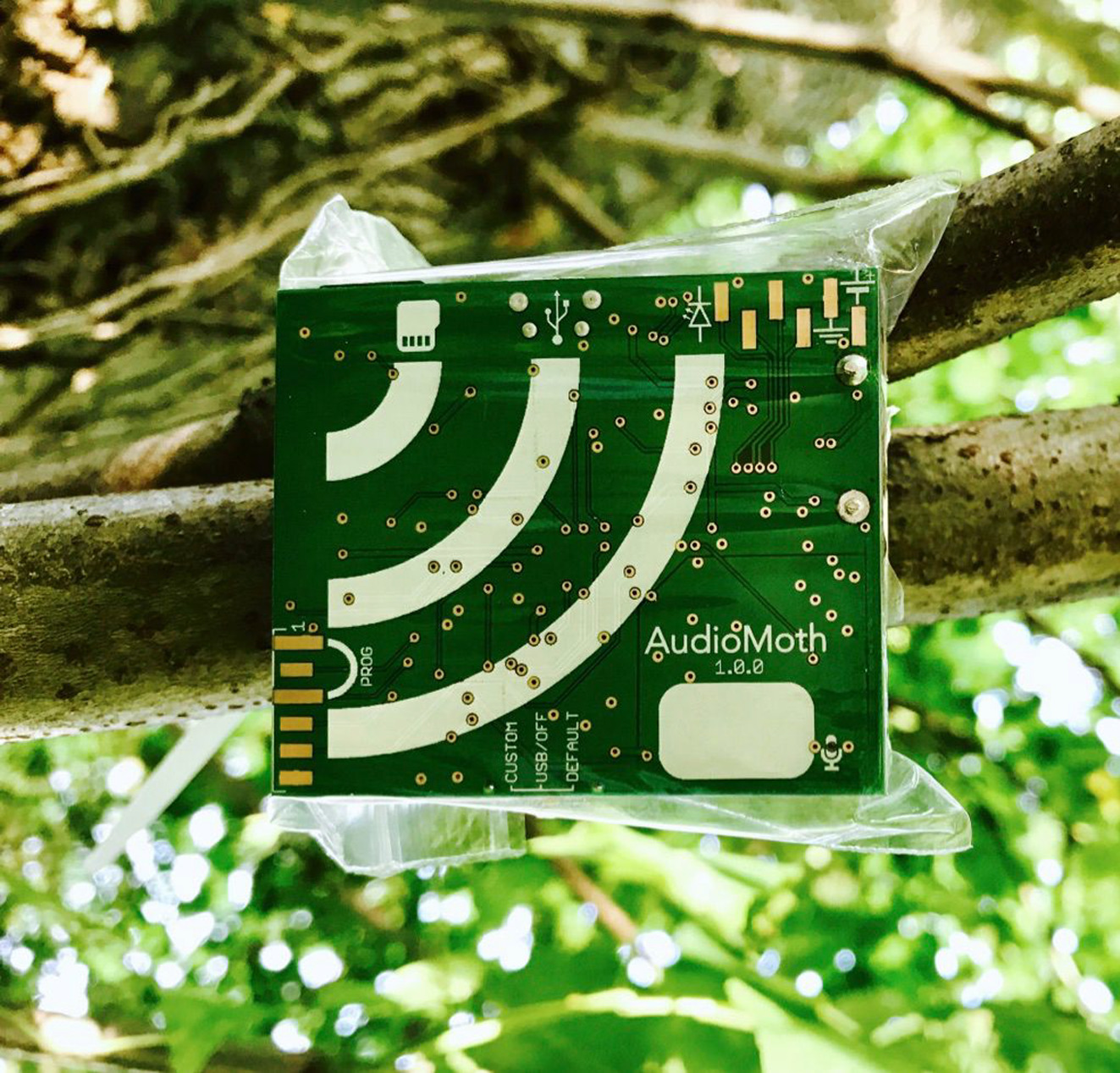
An AudioMoth: a low-cost bioacoustic sensor for capturing audio in the field. Credit: (Hill, et al., 2017) under CC-BY.
What surprised me is that we often don't analyze audio natively. Instead, we convert the audio to an image and then classify it.
The audio and images below show the sound and corresponding amplitude-time graph and spectrogram.
- An amplitude-time graph plots signal amplitude vs. time, showing how loud the animal is at each moment.
- A spectrogram shows frequency over time in terms of Y-position, and the amplitude using the color brightness.
Quite quickly, you can tell species apart just by their very distinct audio/image patterns!
Jaguar
Credit: George Vlad under CC BY-NC-SA
Red-ruffed Fruitcrow
Credit: Rodrigo Dela Rosa under CC BY-NC-SA
Saffron Toucanet
Credit: Daniel Mello under CC BY-NC-SA
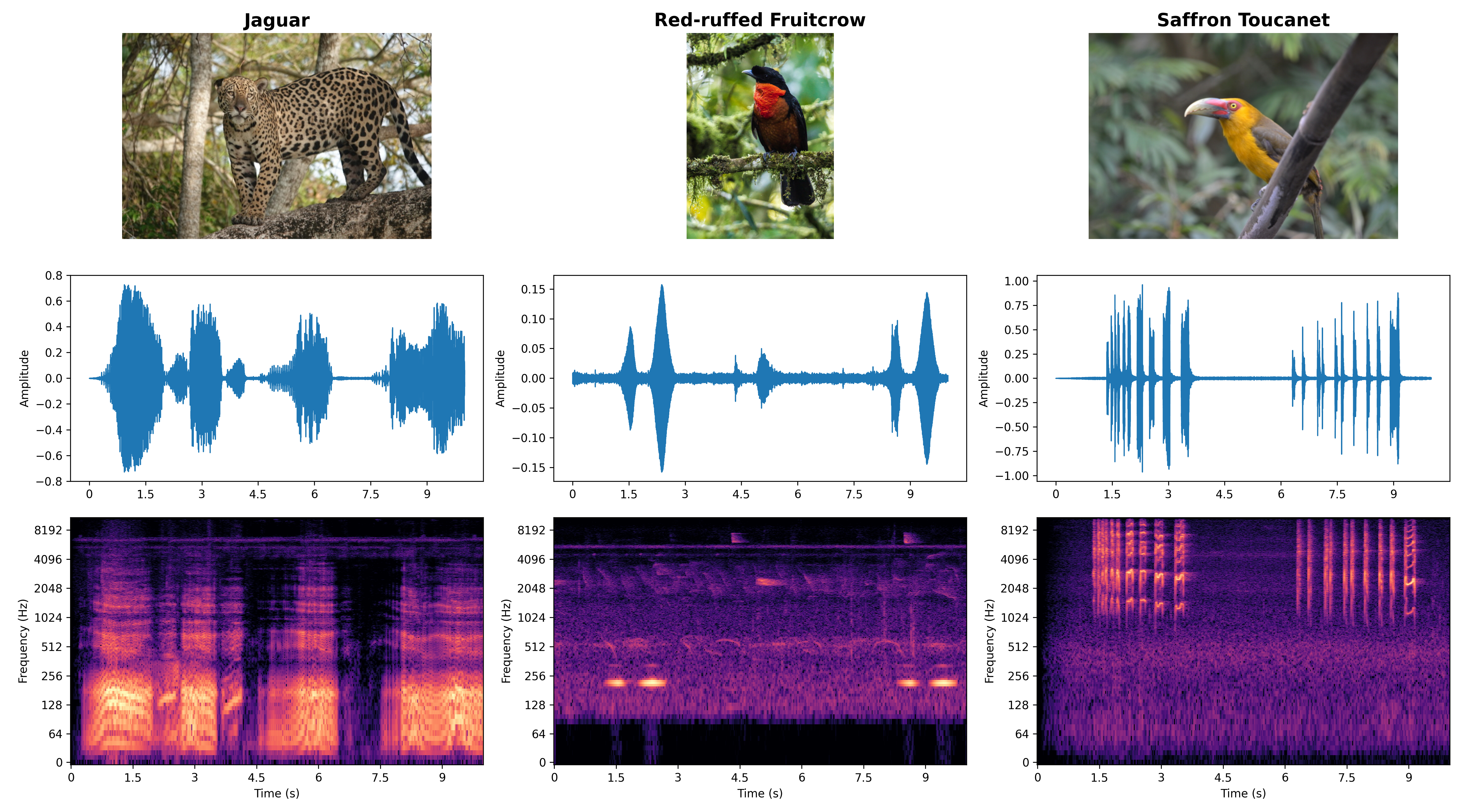
Amplitude-graphs and spectrograms of various Atlantic Forest Animals. (Left): Jaguar by Ute Welk. (Middle): Red-ruffed Fruitcrow by David Monroy R. (Right): Saffron Toucannet by Claudia Mermelstein. All under CC BY-NC.
Sharing Audio
iNaturalist is one of the largest collections of crowd-sourced biological data.
The platform allows users to upload images, audio, and observation records. This data can then be used to train machine learning models for aided detection and classification. The app Merlin BirdID by the Cornell Lab of Ornithology, for instance, allows people to identify the birds around them by classifying bird recordings during walks.
Two other large platforms are eBird (also by Cornell Lab of Ornithology), and Xeno-Canto.
Below are a sample of audio recordings collected by citizen scientists of birds in the Atlantic Forest!
Interactive: Explore the birds of the Atlantic Forest. Full page
Audio Traps for the Atlantic Forest
It is important to note that platforms such as iNaturalist are generally skewed towards North America and Europe, and towards more easily accessible areas, such as near roads.
This is one reason the Atlantic Forest needs targeted audio data collection efforts.
One example is Rainforest Connection (RFCx).
They use AI and bioacoustic sensors to collect acoustic data, detect threats, and monitor wildlife, alerting partners and informing conservation action. They created a device called Arbimon that can be mounted on trees. Arbimons are already deployed at over 800 sites in the Atlantic Forest, collecting crucial biodiversity data.
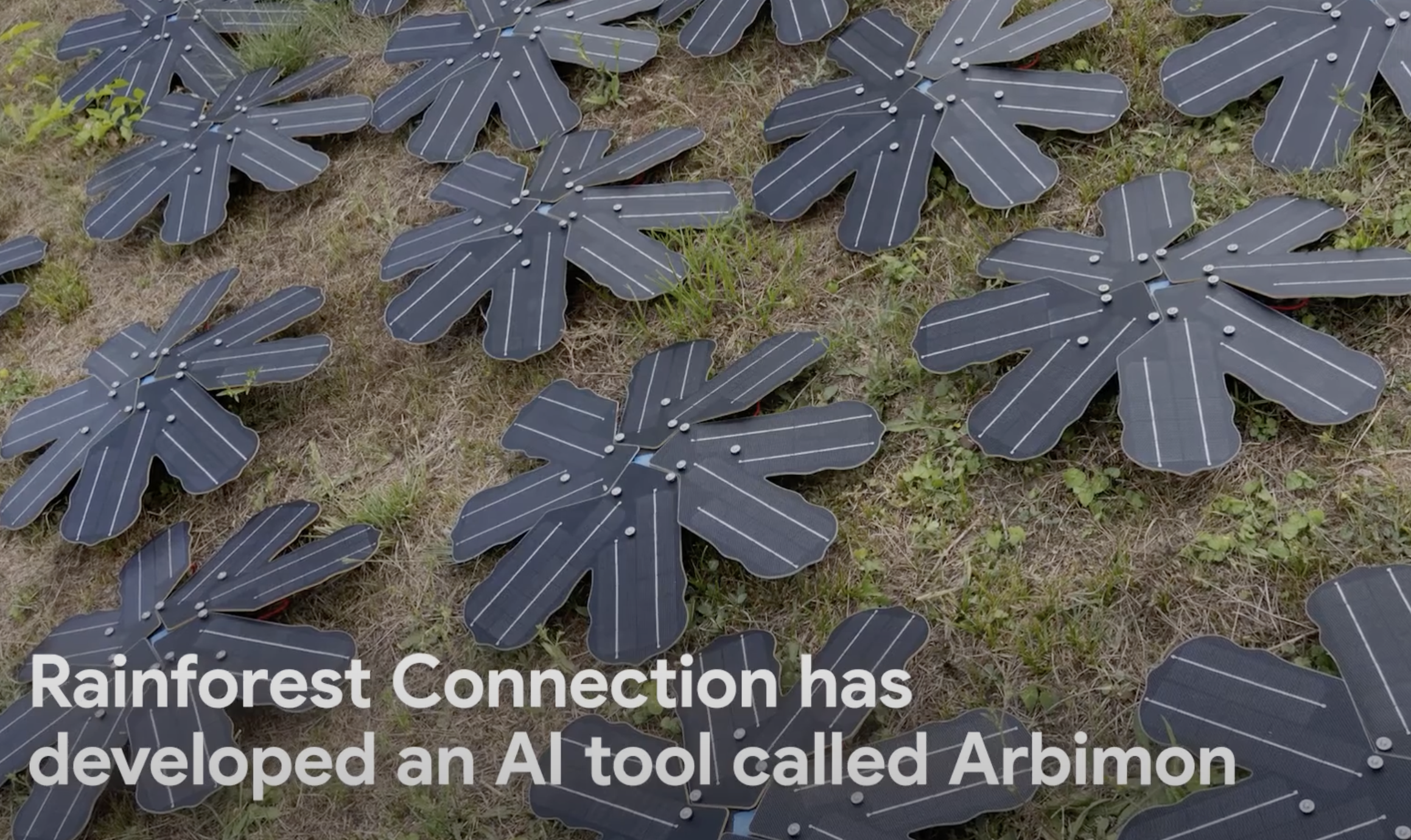
The Arbimon accoustic sensor. From Rainforest Connection, Arbimon, & Google.org - Using sounds and AI to protect our planet (00:35).
Audio classification also presents its own unique challenges.
One example is overlapping audio: it is rare to hear only one bird at a time, which can make classification tricky. This is often known as the "Cocktail Party Problem".
The Earth Species Project was founded in 2017 to develop AI tools to decode non-human communication—addressing manual bottlenecks in large-scale acoustic monitoring. For instance, Voxaboxen makes it more efficient to annotate long recordings.
Interestingly, the Earth Species Project (ESP) goes further than animal audio processing—their goal is to decode animal communication itself. On the one hand, who says we have the right to intrude on animal communication, or what happens if our attempts lead to significant distress? On the other hand, it might prove to be a way to get closer to animals and learn from their wisdom.
I spoke with David Robinson, Senior AI Research Scientist at ESP, who told me this: "One of the probable root causes of the loss of ecosystems and biodiversity on planet Earth is that humans are disconnected from nature. So by decoding animal communication, we can help people listen to nature better and reconnect."
I found this really interesting—that the goal is not to command but to listen: "It's less about what I would say to an animal and more about what we would learn and how we would listen," added David. This wisdom could lead us to better ways of coexisting with other species and even to new discoveries.
The Earth Species Project underlines an important point. In our quest for planetary dominance, we've forgotten that humans are animals, too.
Beyond Image and Audio
Although camera- and audio traps are helpful, they still give local samples.
But technologies such as drone and satellite imagery are paving the way for even larger-scale analysis. As Souza notes, "the problem in ecology is scale. How can you scale up your findings? We cannot sample the whole forest. It's impossible. [...] But by using drones and satellite images, we can scale it up."
Now, researchers are experimenting with integrating data at all scales, from local sightings to remote sensing indicators, to get better predictors of species distribution.
Crucially, these technologies are helping us see the true richness of biodiversity on this planet, reminding us of the ecosystems in need of protecting.
References
2024 Living Planet Report. (2024, October 10). World Wildlife Fund. https://www.worldwildlife.org/publications/2024-living-planet-report/
A Community for Naturalists · iNaturalist. (n.d.). Retrieved November 28, 2025, from https://www.inaturalist.org/
About | Wildlife Insights. (n.d.). Retrieved December 10, 2025, from https://www.wildlifeinsights.org/about
Arbimon. (n.d.). Retrieved November 28, 2025, from https://arbimon.org/p/sounds-of-atlantic-forest/insights
Arbimon—Empower your wildlife research. (n.d.). Retrieved November 28, 2025, from https://arbimon.org/
Atlantic Forest Birds: Xeno-canto. (n.d.). Retrieved November 28, 2025, from https://xeno-canto.org/set/2857
Atlantic Forest—Species. (n.d.). Retrieved November 28, 2025, from https://www.cepf.net/our-work/biodiversity-hotspots/atlantic-forest/species
AudioMoth | Open Acoustic Devices. (n.d.). Openacousticdevices. Retrieved November 28, 2025, from https://www.openacousticdevices.info/audiomoth
Beery, S., Morris, D., & Yang, S. (2025). Efficient Pipeline for Camera Trap Image Review [Jupyter Notebook]. http://github.com/agentmorris/MegaDetector (Original work published 2023)
Biodiversity. (n.d.-a). Retrieved December 10, 2025, from https://www.who.int/news-room/fact-sheets/detail/biodiversity
Bradypus torquatus (maned three-toed sloth) | INFORMATION | Animal Diversity Web. (n.d.). Retrieved November 28, 2025, from https://animaldiversity.org/accounts/Bradypus_torquatus/
Cocktail Party Effect. Retrieved January 8, 2026, from Wikipedia.org website: https://en.wikipedia.org/wiki/Cocktail_party_effect
eBird—Discover a new world of birding... (n.d.). Retrieved December 10, 2025, from https://ebird.org/home
Everything I know about ML and camera traps. (n.d.). Retrieved November 28, 2025, from https://agentmorris.github.io/camera-trap-ml-survey/
Gadot, T., Istrate, Ștefan, Kim, H., Morris, D., Beery, S., Birch, T., & Ahumada, J. (2024). To crop or not to crop: Comparing whole-image and cropped classification on a large dataset of camera trap images (Version 1.0.0) [Python]. https://doi.org/10.1049/cvi2.12318
GitHub—Ultralytics/yolov5: YOLOv5 🚀 in PyTorch > ONNX > CoreML > TFLite. (n.d.). Retrieved November 28, 2025, from https://github.com/ultralytics/yolov5
Global Risks Report 2023 | World Economic Forum | World Economic Forum. (n.d.). Retrieved December 10, 2025, from https://www.weforum.org/publications/global-risks-report-2023/
Golden lion tamarin. (2025). In Wikipedia. https://en.wikipedia.org/w/index.php?title=Golden_lion_tamarin&oldid=1322465714
Hill, A. P., Prince, P., Piña Covarrubias, E., Doncaster, C. P., Snaddon, J. L., & Rogers, A. (2018). AudioMoth: Evaluation of a smart open acoustic device for monitoring biodiversity and the environment. Methods in Ecology and Evolution, 9(5), 1199–1211. https://doi.org/10.1111/2041-210X.12955
Microsoft/CameraTraps. (2025). [Python]. Microsoft. https://github.com/microsoft/CameraTraps (Original work published 2018)
NatureLM-audio: An Audio-Language Foundation Model for Bioacoustics. (n.d.). Retrieved November 28, 2025, from https://earthspecies.github.io/naturelm-audio-demo/
Overview—Pytorch Wildlife. (n.d.). Retrieved November 28, 2025, from https://microsoft.github.io/CameraTraps/
Photo 73961577, (c) Jens-Christian Svenning, some rights reserved (CC BY), uploaded by Jens-Christian Svenning · iNaturalist. (n.d.). iNaturalist. Retrieved November 28, 2025, from https://www.inaturalist.org/photos/73961577
Photo 328591619, (c) Tomaz Nascimento de Melo, some rights reserved (CC BY-NC-ND), uploaded by Tomaz Nascimento de Melo · iNaturalist. (n.d.). iNaturalist. Retrieved November 28, 2025, from https://www.inaturalist.org/photos/328591619
Photo 450618707, (c) Arthur Gomes, some rights reserved (CC BY-NC-SA), uploaded by Arthur Gomes · iNaturalist. (n.d.). iNaturalist. Retrieved November 28, 2025, from https://www.inaturalist.org/photos/450618707
Rainforest Connection—Stopping Illegal Logging & Protecting Wildlife. (n.d.). Retrieved November 28, 2025, from https://rfcx.org/ecoacoustics
Reytar, K., Veit, P., & Braun, J. von. (2024). Protecting Biodiversity Hinges on Securing Indigenous and Community Land Rights. https://www.wri.org/insights/indigenous-and-local-community-land-rights-protect-biodiversity
South American tapir. (2025). In Wikipedia. https://en.wikipedia.org/w/index.php?title=South_American_tapir&oldid=1322058926
Souza, Y., Gonçalves, F., Lautenschlager, L., Akkawi, P., Mendes, C., Carvalho, M. M., Bovendorp, R. S., Fernandes-Ferreira, H., Rosa, C., Graipel, M. E., Peroni, N., Cherem, J. J., Bogoni, J. A., Brocardo, C. R., Miranda, J., Zago da Silva, L., Melo, G., Cáceres, N., Sponchiado, J., … Galetti, M. (2019). ATLANTIC MAMMALS: A data set of assemblages of medium- and large-sized mammals of the Atlantic Forest of South America. Ecology, 100(10), e02785. https://doi.org/10.1002/ecy.2785 Tan, M., & Le, Q. V. (2021). EfficientNetV2: Smaller Models and Faster Training (No. arXiv:2104.00298). arXiv. https://doi.org/10.48550/arXiv.2104.00298
The Atlantic Forest. (n.d.-a). World Wildlife Fund. Retrieved December 10, 2025, from https://www.worldwildlife.org/places/atlantic-forest/
The Invisible Species: Big Data Unveil Coverage Gaps in the Atlantic Forest Hotspot—Trindade—2024—Diversity and Distributions—Wiley Online Library. (n.d.). Retrieved November 28, 2025, from https://onlinelibrary-wiley-com.stanford.idm.oclc.org/doi/10.1111/ddi.13931
The IUCN Red List of Threatened Species. (n.d.-a). IUCN Red List of Threatened Species. Retrieved December 10, 2025, from https://www.iucnredlist.org/en
The Story. (n.d.). Merlin Bird ID - Free, Instant Bird Identification Help and Guide for Thousands of Birds. Retrieved December 10, 2025, from https://merlin.allaboutbirds.org/the-story/
This is how biodiversity loss impacts medicine and human health. (2023, November 23). World Economic Forum. https://www.weforum.org/stories/2023/11/biodiversity-nature-loss-health-medicine/
What Sound Does a Sloth Make? - Animal Hype. (n.d.). Retrieved November 28, 2025, from https://animalhype.com/mammals/what-sound-does-a-sloth-make/
With a little help from my friends: Sloth hair, moths and algae. (n.d.). The Sloth Conservation Foundation. Retrieved November 28, 2025, from https://www.slothconservation.org/blog/with-a-little-help-from-my-friends-sloths-moths-and-algae
xeno-canto: Sharing wildlife sounds from around the world. (n.d.). Retrieved December 10, 2025, from https://xeno-canto.org/